
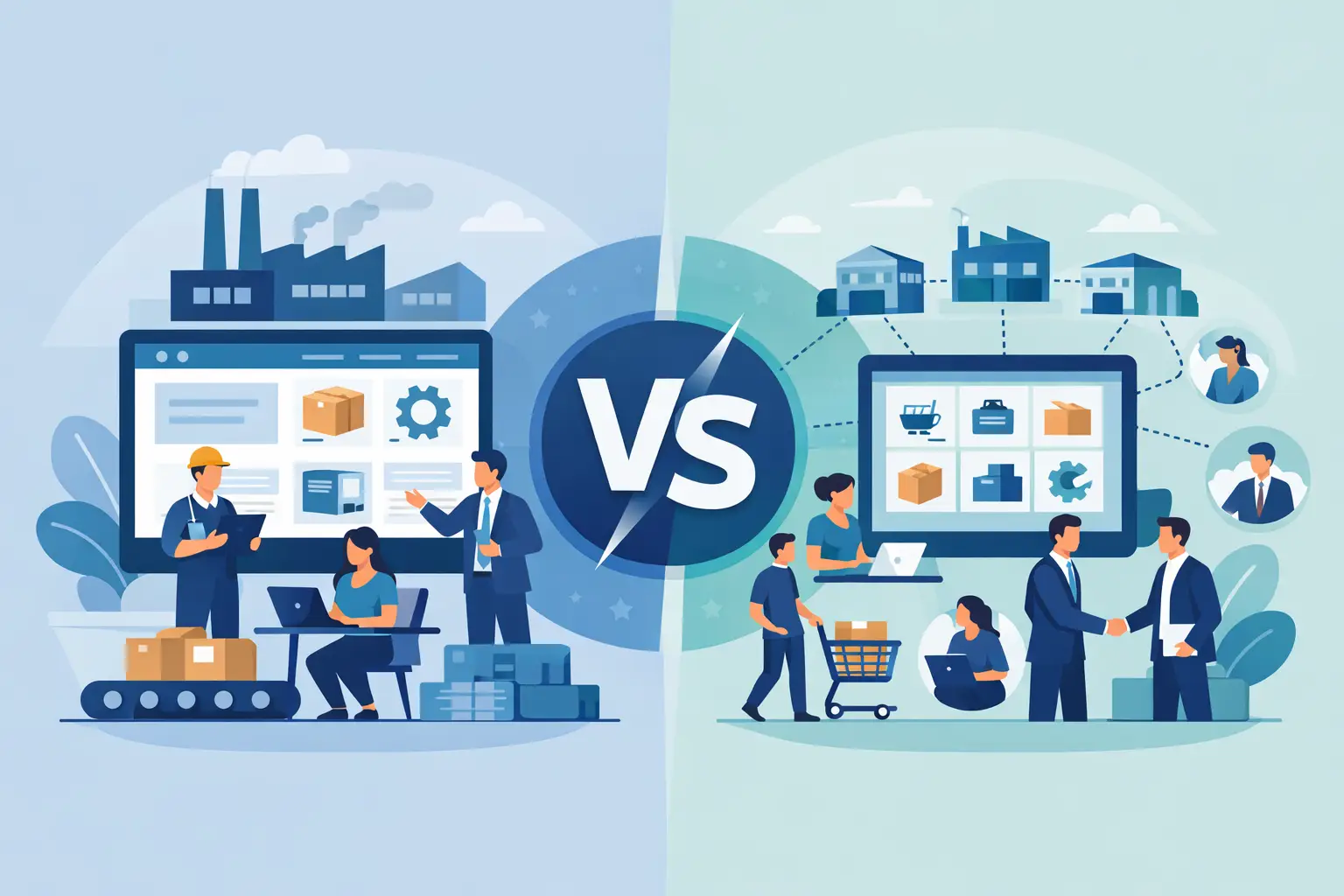
A vehicle is ready to register, the appointment is booked, and one missing document is holding up the process. That is where the manufacturer portal vs COC marketplace decision becomes practical, not theoretical. Both routes may lead to an official Certificate of Conformity, but the ordering experience, available support, and time required can be very different.
For a private owner importing one car, a dealer handling multiple brands, or a registration agent working against a deadline, the right choice depends on more than price. It depends on whether the vehicle is eligible, how quickly the certificate is needed, and how much uncertainty the buyer can afford.
What both options should deliver
A Certificate of Conformity, often called a COC, is an official document issued by or sourced directly from the vehicle manufacturer. It confirms that a specific vehicle type was approved to meet applicable European type-approval requirements when it was produced.
Registration authorities may request a COC when a vehicle is imported, registered in another European country, or assessed for technical compliance. The document typically identifies key specifications such as the vehicle identification number, emissions data, engine details, weights, dimensions, and approved variant information.
The critical standard is simple: the document must be authentic, correct for the vehicle, and accepted by the relevant authority. A fast order is of little value if the certificate is not manufacturer-issued or does not match the VIN.
Manufacturer portal vs COC marketplace: the core difference
A manufacturer portal is a brand-specific ordering channel. A BMW owner may need to use one process, while a Mercedes-Benz, Toyota, Volkswagen, or Tesla owner may face a completely different website, document requirement, payment system, and fulfillment schedule.
A COC marketplace is a centralized service that handles requests across many manufacturers. Instead of learning a different process for every OEM, the customer selects the brand, provides the required vehicle information, and orders through one established channel. The marketplace then obtains the official COC through its manufacturer sourcing process.
Neither route automatically makes the document more legitimate. Authenticity depends on the source and the document itself, not on whether the order began on an OEM website or through a specialist provider. The distinction is primarily about access, service, and operational convenience.
When ordering through a manufacturer portal makes sense
A direct manufacturer portal can be a reasonable option when the customer owns one vehicle, has no immediate deadline, and already knows exactly which department or online channel handles COC requests. It may also suit customers who prefer to deal only with the vehicle brand, even if the process involves more steps.
For some manufacturers, the portal is clear and accessible. The buyer enters the VIN, pays the listed fee, and waits for the stated processing period. If there is no issue with eligibility or vehicle history, this can be straightforward.
The limitation is fragmentation. Each OEM sets its own rules. One may require copies of registration documents, another may ask for proof of ownership, and another may not offer online ordering in every market. Support teams are generally focused on their own brand and may not be equipped to explain cross-border registration requirements.
A portal can also become less practical when the vehicle is older, imported from outside its original market, modified, or missing paperwork. In those cases, the buyer may spend time locating the correct department before learning whether a standard COC can be issued at all.
Why a COC marketplace is often faster to manage
A specialist marketplace is designed around the customer’s actual problem: obtaining the correct official document with minimal administrative delay. It brings multiple brands into one process, which is particularly useful for dealers, fleet operators, relocation professionals, and registration agents handling varied vehicle makes.
The benefit is not merely having many brands in one catalog. It is having a consistent ordering path. Customers know where to provide a VIN, what information is needed, how pricing is presented, and what delivery expectation applies. That consistency reduces avoidable mistakes when time is limited.
A marketplace can also offer practical pre-order guidance. For example, it may help identify whether a COC is likely available for a particular vehicle, whether a VIN contains the required details, or whether another manufacturer document may be needed instead. This does not replace the authority’s decision, but it can prevent an order from being placed on the wrong assumption.
COC-Express.eu is built for this centralized approach, providing official manufacturer-issued certificates across a wide range of vehicle brands with secure ordering and clear processing expectations.
Compare the factors that affect your decision
Brand coverage and repeat use
A manufacturer portal only serves its own vehicles. That is acceptable for a one-off request, but it creates extra work for businesses that process multiple makes. A used-car dealer importing Audi one week and Volvo the next must manage separate OEM processes.
A marketplace provides one point of contact across brands. This is especially valuable when a team needs a repeatable workflow rather than a different procedure for each vehicle manufacturer.
Support before and after ordering
OEM portals may provide official information, but their support is usually limited to their internal process. Customers can be transferred between customer service, technical departments, and national offices, especially when the request concerns an imported vehicle.
A COC specialist focuses on document orders every day. That makes it better positioned to explain the order requirements, request missing information early, and clarify realistic delivery expectations. Good support is not a substitute for the COC itself, but it matters when a registration deadline is approaching.
Processing time and visibility
Direct ordering does not always mean express processing. Manufacturer turnaround times vary by brand, vehicle age, country, and internal workload. Some requests require manual review before an issuance date can be confirmed.
A marketplace cannot eliminate manufacturer production time, but it can make the process easier to understand. Transparent processing windows, order confirmation, and a defined contact channel give buyers a clearer view of what happens next. For time-sensitive registration, that certainty is often as valuable as speed.
Pricing and total effort
The lowest listed price is not always the lowest-cost route. Consider the time spent locating the correct portal, translating instructions, resolving payment restrictions, and following up on an unclear order. For a business, those administrative hours add up quickly.
A marketplace may charge for the added service, centralization, and support. That trade-off can be worthwhile when it reduces staff time or avoids a delayed registration. Customers should expect transparent pricing and should be cautious of unusually cheap offers that do not clearly state the document’s manufacturer origin.
Authenticity checks that should never be skipped
Whether you choose a portal or marketplace, verify the fundamentals before ordering. The service should clearly state that it supplies an official OEM Certificate of Conformity, not a generic data sheet, vehicle history report, or unofficial technical summary.
Use the full VIN exactly as shown on the vehicle and registration documents. A single incorrect character can delay the request or lead to a document that cannot be used. Confirm that the vehicle was built for European type approval where applicable, because not every imported or non-European specification vehicle is eligible for a standard EU COC.
Also check what the registration authority requires. Some cases involve additional documents, inspections, translations, or national approval procedures. A COC is often central to registration, but it is not a universal replacement for every local requirement.
Which route should you choose?
Choose a manufacturer portal when you are comfortable dealing with a single brand, have enough time for that brand’s process, and prefer a direct OEM channel. It can be a sensible route for uncomplicated, non-urgent requests.
Choose a COC marketplace when you need multi-brand access, a consistent order process, clear support, or a quicker path through the administrative work. It is often the stronger option for importers, dealerships, transport professionals, and owners who do not want to spend days navigating separate manufacturer systems.
The best decision is the one that gives you a genuine, VIN-matched manufacturer document with enough time to complete registration. Before your appointment date gets close, verify eligibility, submit accurate vehicle details, and use a provider that makes authenticity and delivery expectations clear from the start.