
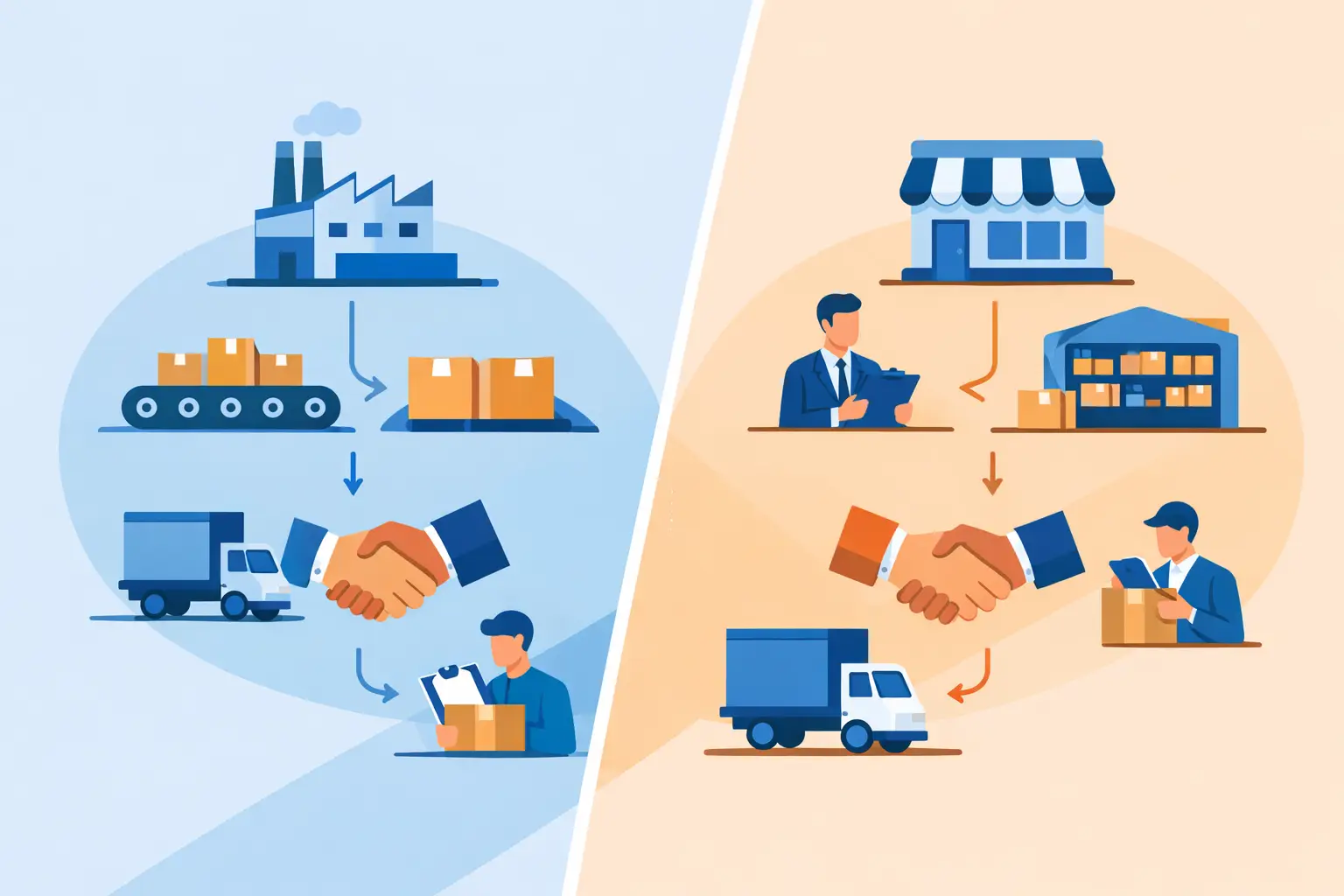
If your registration deadline is close and the authority asks for an official Certificate of Conformity, the manufacturer direct vs reseller COC question becomes practical very quickly. The real issue is not where you click first. It is whether you receive a genuine OEM document, on time, with the right vehicle data, and without adding avoidable delays to an already time-sensitive process.
For vehicle owners, importers, dealers, and registration agents, that distinction matters more than price alone. A COC is not a casual paperwork item. It is a compliance document used to support registration, import, and type-approval-related checks across Europe. If the source is unclear, the turnaround is vague, or the document is not actually issued by the manufacturer, the risk falls on you.
Manufacturer direct vs reseller COC: what changes?
At first glance, buying direct from the vehicle manufacturer seems like the safest route. It can be. If the brand has a responsive process, clear instructions, and a customer support team that handles COC requests efficiently, direct ordering may work well.
But in practice, the experience varies widely by brand. Some manufacturers have dedicated certificate portals. Others route requests through multiple departments, local distributors, or regional offices. Some are fast. Some are not. Some make sense for private owners, while others are difficult for importers or professionals managing multiple vehicles.
A reseller works differently. A specialized COC service acts as the operational layer between the customer and the manufacturer process. That only adds value if the reseller is sourcing official OEM certificates, not substitutes, not unofficial data sheets, and not generic compliance paperwork presented as equivalent. The reseller is not the document issuer. The manufacturer remains the issuer. The reseller’s role is to make access faster, clearer, and easier to manage.
That is the core of the manufacturer direct vs reseller COC decision. You are comparing two ways to obtain the same category of official document, but the customer experience, speed, support, and risk control can be very different.
The direct-from-manufacturer route
Ordering directly from the manufacturer appeals to customers who want zero intermediaries. That logic is understandable. If the document comes from the OEM, going straight to the source sounds like the cleanest path.
Sometimes it is. If you know the exact department, the brand offers your market support, and the process is transparent, direct ordering can be a reasonable option. For a straightforward request on a supported brand, there may be no issue at all.
The trade-off is that manufacturers are not always set up for speed or simplicity at the retail level. Their main business is building and supporting vehicles, not optimizing individual certificate requests across every customer type and every cross-border registration case. A private owner may struggle to find the right request channel. A dealer may have to contact one office for one brand and a completely different structure for another. An importer handling several makes can lose time just navigating inconsistent systems.
There is also the support question. If a request stalls, documentation is incomplete, or the wrong form is used, customers often end up chasing internal brand teams that do not prioritize these requests with the same urgency as someone facing a registration deadline.
When a reseller is the better option
A specialized reseller can be the better option when speed, clarity, and multi-brand access matter more than dealing with each OEM channel yourself. That is especially true for used vehicle imports, relocations, dealer stock, fleet operations, and professional registration workflows.
The important distinction is this: a trustworthy reseller should provide access to an official manufacturer-issued COC, not replace it with something easier to generate. That means authenticity is still the standard. The value is in the service layer around the document – brand coverage, order handling, document verification steps, transparent timelines, and customer support that understands the registration use case.
For many customers, convenience is not a minor benefit. It is the difference between a controlled process and a stalled one. If you need a Toyota this week, a BMW next week, and a Volkswagen after that, handling three separate manufacturer systems is inefficient. A centralized service can remove that friction.
This is why businesses and private importers often prefer a specialist such as COC-Express.eu. The appeal is not that the document becomes less official. The appeal is that the process becomes more predictable.
The main risks in the reseller market
Not every reseller deserves trust. This is where customers need to be careful.
Some websites use the language of conformity certificates loosely. They may offer VIN reports, technical data extracts, or internal templates that are not the official OEM COC required by the registration authority. Others are unclear about who issues the document. If that answer is vague, that is a warning sign.
In the manufacturer direct vs reseller COC comparison, the safest reseller is the one that states clearly that the certificate is manufacturer-issued, explains processing times, identifies brand coverage, and communicates what the customer will receive. Trust comes from precision, not marketing volume.
It also helps to look at operational signals. Is pricing transparent? Are turnaround estimates stated clearly? Does the service explain what vehicle categories are covered? Does it sound like a specialist in compliance documentation, or like a generic document broker handling everything and nothing well?
A strong reseller reduces uncertainty. A weak one adds another layer of it.
Speed matters, but only if the document is valid
Customers under pressure often focus on delivery time first. That makes sense. Registration appointments, transport schedules, resale plans, and customs or import timelines can move quickly.
But speed alone is not enough. A fast wrong document is still a problem. If a reseller promises instant delivery of something that should normally require manufacturer sourcing and verification, you should ask what is actually being delivered.
The right balance is fast and authentic. That means realistic turnaround times, secure ordering, and a clear statement that the certificate is official. In most cases, the best service is not the one making the biggest promise. It is the one making the most credible promise.
How to judge the right source for your COC
The best choice depends on your situation. If you are handling one vehicle, know the brand process, and have time to work through it, direct ordering may be completely fine. If you are under time pressure, managing several brands, or simply want a simpler route with support, a specialized reseller can save real time.
What matters is asking the right questions before ordering. First, is the COC official and manufacturer-issued? Second, is the process transparent about timing and cost? Third, does the seller understand registration and import use cases, or just sell documents in general? Fourth, can they handle your vehicle category correctly – passenger car, motorcycle, caravan, or commercial vehicle?
Those questions matter more than the label of direct or reseller. A poor direct process can still be slow and frustrating. A strong reseller process can still be fully legitimate and more efficient.
Why buyers often misunderstand this comparison
Many people assume reseller means unofficial. That is not necessarily true. The key issue is not whether there is an intermediary. The key issue is whether the final certificate is the genuine OEM document accepted for the intended registration purpose.
In other words, the reseller model is not the problem. Lack of transparency is the problem. When a specialist service is built around official sourcing, compliance knowledge, and secure handling, it can be the more reliable route for customers who need certainty.
That is particularly relevant in cross-border situations. A customer importing a vehicle rarely wants to spend days identifying the correct manufacturer office, local market procedure, language requirement, and payment path. They want one secure process and a clear result.
The practical answer to manufacturer direct vs reseller COC
If your priority is handling everything yourself and the manufacturer has a clean, responsive process, direct can work. If your priority is speed, reduced admin, multi-brand access, and support from a specialist that sources official OEM certificates, a reseller is often the more practical option.
The smart decision is not ideological. It is operational. Choose the route that gives you the highest confidence that the document will be authentic, correct for your VIN, and delivered within a timeline you can actually work with.
When vehicle paperwork affects registration, movement, and compliance, certainty has value. The best COC source is the one that removes doubt before it becomes delay.