
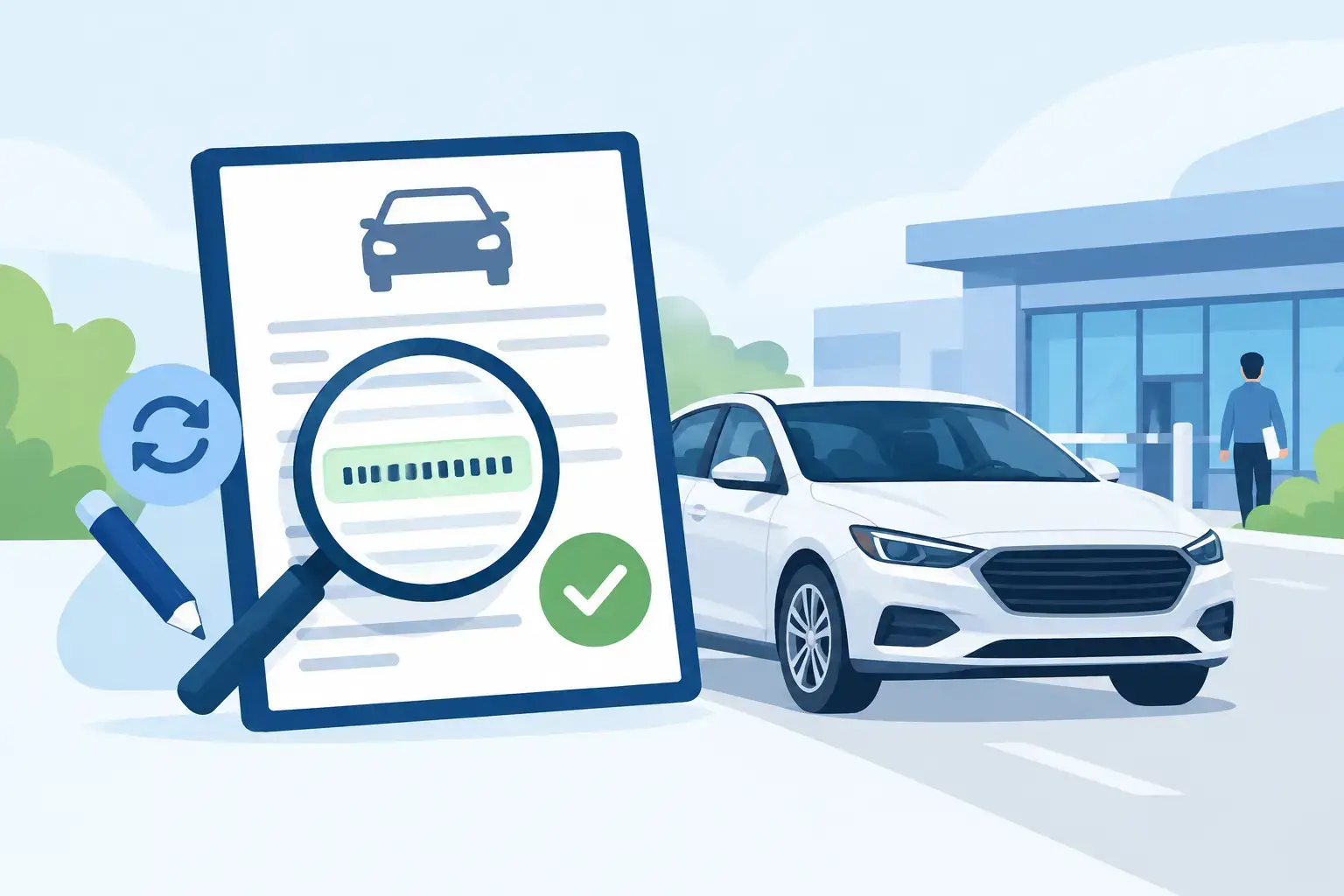
A COC VIN correction is not a routine paperwork edit. The Vehicle Identification Number on a Certificate of Conformity must match the vehicle exactly, character for character, before a registration authority can accept the document. A single incorrect digit, a transposed character, or a mismatch between the certificate and the vehicle can stop an import or registration process until the issue is resolved.
For owners, dealers, and import professionals, the priority is clear: identify where the error started, confirm the correct VIN, and obtain the appropriate official document. Trying to alter a COC yourself is never an acceptable solution. A Certificate of Conity is an OEM-issued compliance document, and any correction must be supported and issued through the manufacturer’s authorized process.
Why the VIN on a COC must be exact
The VIN is the unique identifier used to connect a vehicle to its manufacturing, type-approval, and registration records. On an EU Certificate of Conformity, it confirms that the document applies to one specific vehicle, not simply to a model or trim level.
Registration authorities compare the VIN on the COC with the VIN physically displayed on the vehicle, usually on the windshield plate, chassis stamping, door frame label, or manufacturer plate. They may also compare it with the title, previous registration record, customs paperwork, purchase invoice, and inspection documents. If one record differs, the registration officer may pause the application until the discrepancy is explained with valid evidence.
This is why an error that appears minor can have significant consequences. The characters 0 and O, 1 and I, or 5 and S can be misread during manual entry. Yet a VIN mismatch is still a VIN mismatch. The authority cannot assume which character was intended.
COC VIN correction or a new certificate?
Whether a COC VIN correction is possible depends on the source of the problem. The central question is whether the manufacturer-issued certificate contains an error or whether the wrong VIN was entered when the certificate was requested.
If the manufacturer’s original production record and the issued COC contain a genuine administrative mistake, the manufacturer may review the case and issue a corrected document. This normally requires evidence, including clear photographs of the VIN plate or chassis stamping, a copy of the existing COC, and vehicle ownership or registration documents. The manufacturer decides whether a correction is justified.
If the wrong VIN was submitted during the order process, a correction may not be possible on the existing document. Because a COC is assigned to a specific vehicle record, the usual outcome is a newly issued certificate for the correct VIN. The original document may remain invalid for registration because it belongs to the VIN stated on it.
There is also a third possibility: the document is accurate, but another record is wrong. For example, an invoice, title, customs declaration, or inspection form may include a typing error while the COC and vehicle VIN match. In that case, the COC should not be changed. The incorrect supporting record needs to be corrected by the organization that issued it.
Do not alter the certificate yourself
Do not edit a PDF, cross out a character on a paper certificate, add a handwritten note, or ask a third party to modify the document. Registration authorities may reject altered documents, even when the intended correction is obvious. More seriously, an altered official certificate can create questions about authenticity and delay the process further.
A valid resolution must come from the responsible issuer. For a COC, that means the vehicle manufacturer or an authorized channel able to obtain an official OEM document.
Check the VIN before requesting any document
The fastest way to avoid a replacement order is to verify the VIN before submitting it. Use the VIN from the vehicle itself as the primary reference, not only the seller’s listing or a copied document.
Start with the VIN visible through the windshield on most passenger vehicles. Then compare it with the manufacturer plate, chassis stamping where applicable, and the current registration record. A modern VIN generally has 17 characters. Record every character carefully and preserve the exact order.
When checking, pay particular attention to characters that are commonly confused. Many VIN systems exclude the letters I, O, and Q to reduce confusion, but do not rely on that rule alone. Older vehicles, market-specific records, and manually prepared documents can still require closer review. If the vehicle has an unusual VIN format, use the physical identifier and manufacturer records as the deciding evidence.
It is also worth checking that the VIN belongs to the correct vehicle variant. A COC is not interchangeable between vehicles that appear identical. Two vehicles of the same model, year, engine, and color still require separate documents if they have different VINs.
What to do when you find a VIN mismatch
Act before your registration appointment if possible. A mismatch found at the counter can mean a rejected application, a new appointment, and additional storage, insurance, or transport costs.
First, photograph the VIN as displayed on the vehicle. Make sure the image is sharp, complete, and readable. Then place the relevant documents side by side: the COC, current registration certificate, purchase paperwork, inspection report, and customs documents if the vehicle was imported. Identify exactly which document differs and whether the discrepancy is one character or an entirely different VIN.
Next, contact the issuer of the incorrect document. If the COC appears wrong, prepare the existing certificate, VIN photographs, proof of ownership, and any registration record that confirms the correct number. Do not assume that a corrected document can be issued immediately. Manufacturer review times vary by brand, vehicle age, and the availability of historical production data.
If you are ordering a replacement COC, submit the VIN exactly as shown on the vehicle and review it once more before completing the request. A specialist service such as COC-Express.eu can help source an official manufacturer-issued COC for a wide range of brands, but the accuracy of the VIN supplied remains essential to a successful order.
When a COC may not solve the problem
A corrected or replacement COC is not always the answer. Some vehicles were not originally manufactured for the European market, were modified after production, or do not have EU type approval applicable to their configuration. In those cases, the registration authority may require an individual approval, technical inspection, manufacturer data sheet, or other compliance evidence instead of a standard COC.
The same applies when the VIN on the vehicle appears damaged, altered, unreadable, or inconsistent across physical locations. This is not a standard document correction issue. Authorities may require a vehicle identity inspection or further verification before any registration paperwork can move forward.
For used imports, it is wise to resolve VIN questions before payment is finalized or transport is booked. A low purchase price can quickly lose its advantage if the vehicle cannot be registered without lengthy identity or compliance checks.
Prepare for registration with matching records
Before presenting a COC to a registration authority, confirm that the vehicle VIN is consistent across every document you intend to submit. This simple check prevents many avoidable delays. Keep the original COC in good condition, bring supporting records, and use clear copies where your local authority permits them.
If an error is discovered, treat it as a document-control issue rather than a quick formatting fix. The right official document may take longer than a manual edit, but it protects the registration process, the vehicle’s paper trail, and the confidence of the next buyer. A VIN that matches everywhere is one less obstacle between your vehicle and the road.